Dry rot repair in Modesto is one of the most overlooked structural needs facing commercial property owners and property managers across the Central Valley. Dry rot develops quietly inside walls, beneath siding, under decks, and behind fascia boards, where moisture collects and feeds the fungus that breaks down wood fibre. By the time the damage becomes visible, the structural strength of framing, beams, and load bearing components may already be compromised. For owners of retail centres, offices, multifamily complexes, and warehouses, understanding how dry rot forms and how it is properly repaired protects both the safety of the building and the value of the asset.
Highly Favored Contractors approaches dry rot repair Modesto work as a structural and moisture problem, not a cosmetic one. The goal is never simply to replace a rotted board. The goal is to find the moisture source, remove every trace of decayed material, treat the surrounding wood, and rebuild in a way that prevents the problem from returning. This article explains what dry rot is, where it hides in Central Valley commercial buildings, why it cannot be ignored, and how a thorough repair process actually works.
What Causes Dry Rot in Commercial Buildings
Every effective dry rot repair Modesto project begins with understanding the cause. Dry rot is a form of wood decay caused by fungi that digest the cellulose and lignin that give timber its strength. Despite the name, the process depends entirely on moisture. Wood must absorb water above a certain threshold before decay fungi can colonise it. According to the United States Department of Energy guidance on moisture control, air movement carries most of the water vapour that ends up trapped inside building cavities, which is why hidden condensation is such a common trigger for wood decay. Once the moisture content of framing or sheathing climbs high enough, fungal spores that are already present in the environment begin to grow and spread.
The Environmental Protection Agency moisture control guidance for building design and maintenance identifies the most frequent moisture pathways in commercial structures, including roof leaks, plumbing failures inside wall cavities, poor flashing, and landscaping or drainage that pushes water toward the foundation. In Modesto and the wider Central Valley, irrigation overspray, ageing roof membranes, and stucco cracks are common contributors. Each one creates the damp, poorly ventilated conditions that decay fungi need to take hold.
Temperature plays a role as well. The EPA mold course on moisture and building science explains that delayed or insufficient maintenance allows small moisture problems to become large ones, and that high relative humidity inside a building can sustain fungal growth even without an obvious leak. For property managers overseeing multiple sites, this means dry rot is rarely a single isolated event. It is usually the visible result of a moisture issue that has been developing for months or years.
Where Dry Rot Hides in Central Valley Properties
Knowing where decay starts is essential to any dry rot repair Modesto job. One of the reasons dry rot is so damaging is that it almost always begins out of sight. The wood that fails first is rarely the wood you can see. On commercial and multifamily buildings, the most common locations include the following areas, all of which combine exposure to moisture with limited airflow.
- Exterior siding and stucco, where cracks and failed sealant let water reach the wood sheathing behind the finish.
- Window and door sills, where rain and irrigation collect and slowly wick into the framing.
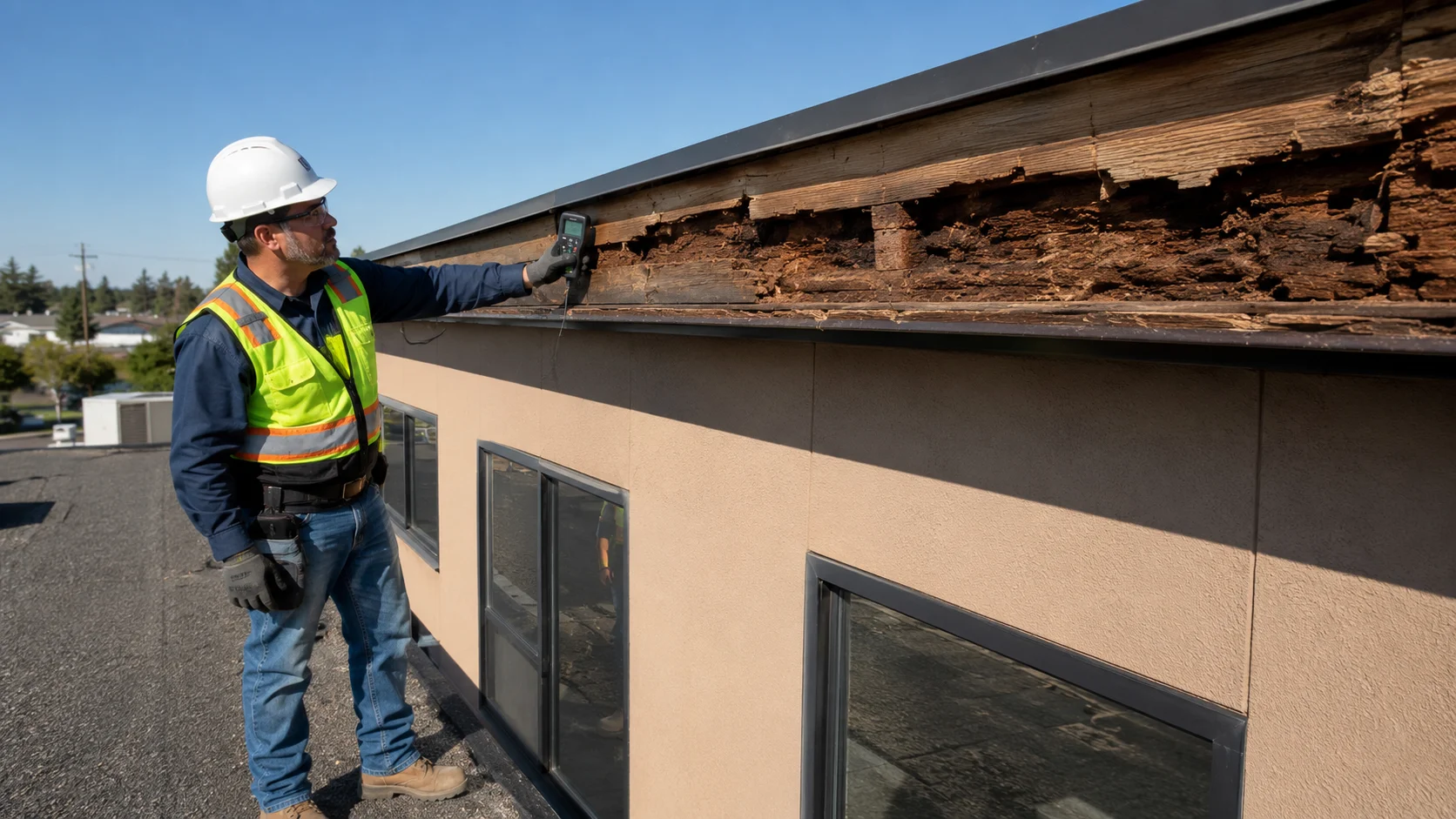
- Fascia boards, eaves, and roof edges, where clogged gutters and poor flashing trap water against the wood.
- Decks, balconies, and stairs, where horizontal surfaces hold moisture and connections to the building stay damp. Structural deck issues often overlap with deck repair and construction needs.
- Crawl spaces and subfloor framing, where ground moisture and condensation accumulate in still air.
- Wall cavities near plumbing, where slow leaks feed decay that may also create conditions for mold remediation.
Because these areas are concealed, a proper assessment uses moisture meters and careful inspection rather than guesswork. The EPA overview of wood preservative chemicals notes that wood degradation problems caused by fungal rot are most common in components exposed to repeated wetting, which is exactly where an experienced contractor concentrates the inspection.
Why Commercial and Multifamily Owners Cannot Ignore Dry Rot
Timely dry rot repair Modesto work matters because decay is not only a maintenance line item. For a commercial property owner or property manager, it is a structural, financial, and liability concern. As decay advances, it reduces the load bearing capacity of framing, beams, joists, and posts. In a region where seismic performance matters, weakened wood is a serious safety issue, because compromised structural members are far less able to handle lateral forces during an earthquake.
Left unaddressed, dry rot also spreads. The fungus moves through connected timber, turning a small repair into a major reconstruction project. What might have been a contained fascia or sill repair can grow into full framing replacement, which drives up both cost and downtime. For income producing properties, downtime means disruption to tenants and lost revenue, which is why early intervention almost always costs far less than delay.
There is a documentation dimension as well. When dry rot is discovered during a sale, refinance, or insurance review, it can affect property value and complicate transactions. Professional dry rot repair Modesto work, with clear records of the moisture source identified and the repair completed, protects the asset and supports the building’s long term value. Owners managing larger portfolios often fold dry rot inspection into a broader commercial property maintenance programme to catch problems before they escalate.
The Dry Rot Repair Modesto Process Step by Step
Effective dry rot repair Modesto work follows a disciplined sequence. Skipping any step, particularly the moisture source step, almost guarantees the decay will return. The process below reflects how a thorough dry rot repair Modesto project is carried out on commercial and multifamily buildings.
- Identify the moisture source.Before any wood is replaced, the cause of the wetting must be found and corrected, whether it is a roof leak, failed flashing, plumbing issue, or drainage problem.
- Assess the full extent of decay.Moisture meters and probing reveal how far the rot has travelled, so the repair covers all affected material rather than only the visible portion.
- Remove all compromised wood.Every piece of decayed timber is cut out and removed, because any rot left behind allows the fungus to continue spreading into sound wood.
- Treat the surrounding timber.Sound wood near the repair is treated to arrest any remaining fungal activity and to add resistance against future decay.
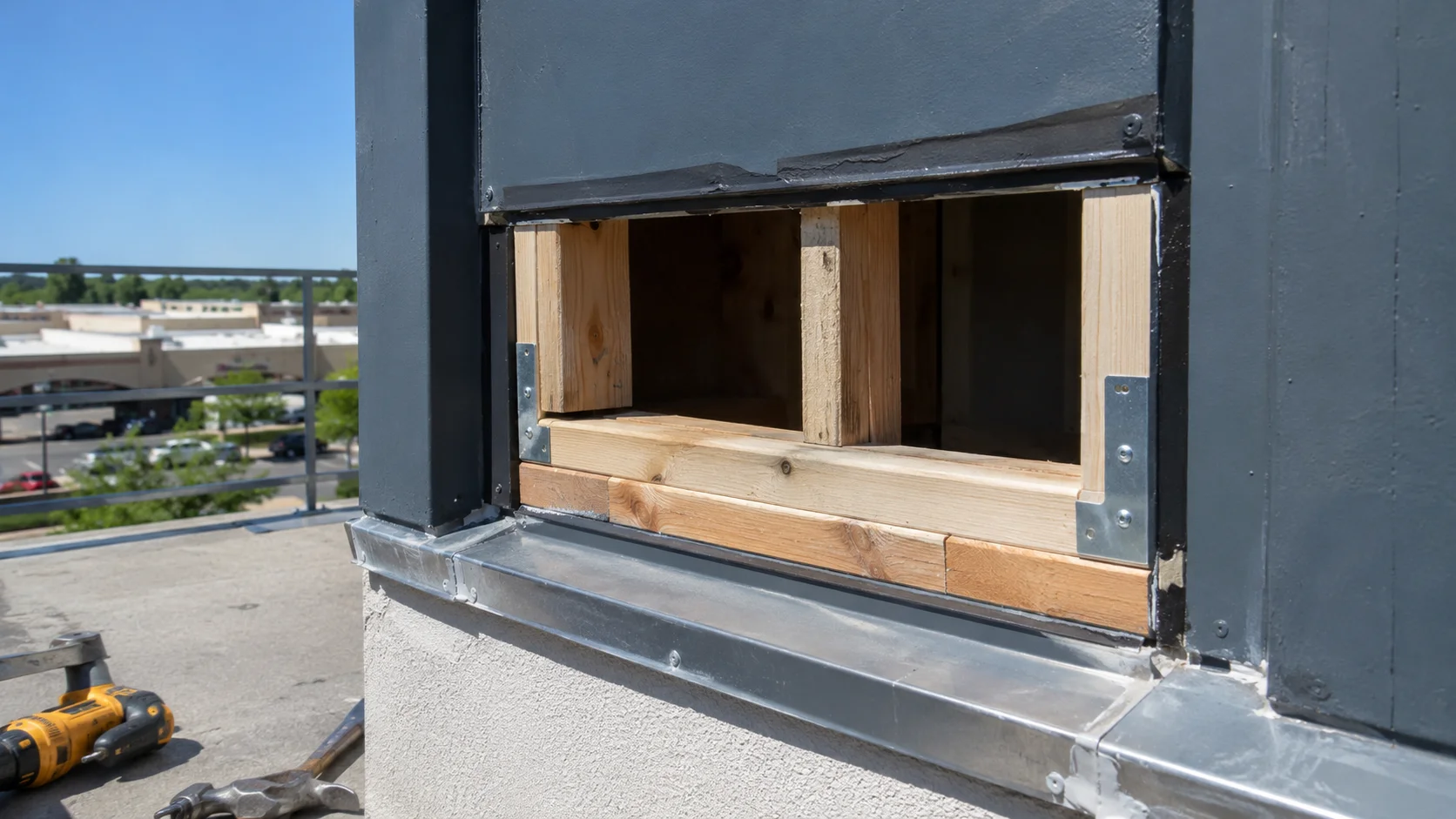
- Rebuild with sound materials.Framing, sheathing, siding, or trim is rebuilt to match the original structure and restore full strength.
- Seal and protect against recurrence.Flashing, sealant, waterproofing, and ventilation improvements are added so moisture cannot re establish itself in the repaired area.
Understanding how moisture moves through a building is central to that final step. The Department of Energy building science guidance on moisture flow explains that controlling liquid water, managing condensation, and using moisture tolerant assemblies are the three pillars of keeping wood dry. A repair that rebuilds the wood but ignores these principles simply resets the clock on the next failure. For exterior finish work that follows a repair, coordinated stucco services and commercial painting help seal the building envelope and protect the new materials.
Areas We Serve Across Modesto and the Central Valley
Highly Favored Contractors provides dry rot repair Modesto services and structural work throughout Modesto and the surrounding region. Service areas include Downtown Modesto, Salida, Empire, Riverdale Park, College Area, Village One, La Loma, and Coffee Sylvan, along with Stanislaus County communities such as Ceres, Turlock, Riverbank, Oakdale, Patterson, Hughson, Waterford, and Keyes. Coverage extends into the wider region including Manteca, Lathrop, Ripon, Stockton, Atwater, and Merced, as well as the Tracy area across San Joaquin County. Property managers with sites in more than one of these communities can review full coverage on the areas we serve page for details on response across the Central Valley.
Frequently Asked Questions
How can you tell if a commercial building has dry rot?
Dry rot often shows itself through wood that feels soft or spongy, paint that bubbles or peels, a musty smell, and timber that crumbles or has a cracked, cube like pattern. Because the worst damage is usually hidden inside walls, under siding, or beneath decks, a reliable dry rot repair Modesto assessment depends on moisture readings and probing of suspect areas rather than surface appearance alone. Any persistent damp area on a commercial property should be inspected promptly.
Is dry rot repair covered by commercial property insurance?
Coverage depends on the cause. Many policies treat dry rot as a maintenance issue and exclude gradual decay, while damage tied to a sudden, covered water event may be considered differently. The key is documentation that identifies the moisture source and the date of the triggering event. Owners should review their specific policy language and keep clear records of inspections and repairs, because outcomes vary by carrier and circumstance.
How long does dry rot repair take on a commercial property?
Timelines for dry rot repair Modesto projects range widely based on how far the decay has spread. A contained repair to fascia or a window sill may take a day or two, while structural repairs involving framing, beams, or multiple wall sections can take a week or longer, especially when permits and engineering are required. Identifying the full extent of decay during assessment is what allows an accurate schedule, since hidden damage is the most common cause of timeline surprises.
Can dry rot come back after it is repaired?
Yes, if the moisture source is not corrected. Dry rot is driven entirely by water, so a repair that replaces wood without fixing the leak, drainage, ventilation, or flashing problem behind it will eventually fail again. A proper dry rot repair Modesto job always addresses the cause first, treats surrounding timber, and adds waterproofing and ventilation so the rebuilt area stays dry. This is why source correction is the single most important step in lasting repair work.
What is the difference between dry rot and structural damage?
Dry rot is a cause, and structural damage is often the result. As decay consumes wood fibre, it reduces the strength of framing, beams, and load bearing elements, which is structural damage. In advanced cases, repairing the rot alone is not enough and the building needs broader structural repairs to restore full load capacity. Catching dry rot early keeps it from progressing into that more serious and costly territory.
Conclusion
Dry rot is a slow, hidden threat that can undermine the safety and value of a commercial or multifamily building long before it becomes visible. Because it is driven by moisture, lasting dry rot repair Modesto work depends on finding and fixing the water source, removing all decayed wood, treating the surrounding timber, and rebuilding in a way that keeps moisture out. Addressing decay early protects structural integrity, limits downtime, and preserves the long term value of the property for owners and managers across the Central Valley.
More Services
For more information about Exterior Trades and related services at Highly Favored Contractors, explore the categories below:
- Exterior Trades
- Dry Rot Repair
- Roofing Services
- Stucco Services
- Commercial Painting
- Structural & Safety
- Structural Repairs
- Deck Repair & Construction
- Cleaning & Restoration
- Facilities Maintenance & Repairs
External Sources Used (for reference only)
- https://www.epa.gov/indoor-air-quality-iaq/moisture-control-guidance-building-design-construction-and-maintenance-0 — US EPA, Moisture Control Guidance for Building Design, Construction and Maintenance
- https://www.energy.gov/energysaver/moisture-control — US Department of Energy, Moisture Control
- https://www.epa.gov/mold/mold-course-chapter-2 — US EPA, Mold Course Chapter 2: Why and Where Mold Grows
- https://www.epa.gov/ingredients-used-pesticide-products/overview-wood-preservative-chemicals — US EPA, Overview of Wood Preservative Chemicals
- https://bsesc.energy.gov/energy-basics/building-enclosure-building-science-intro-moisture-flow — US Department of Energy, Building Science: Intro to Moisture Flow